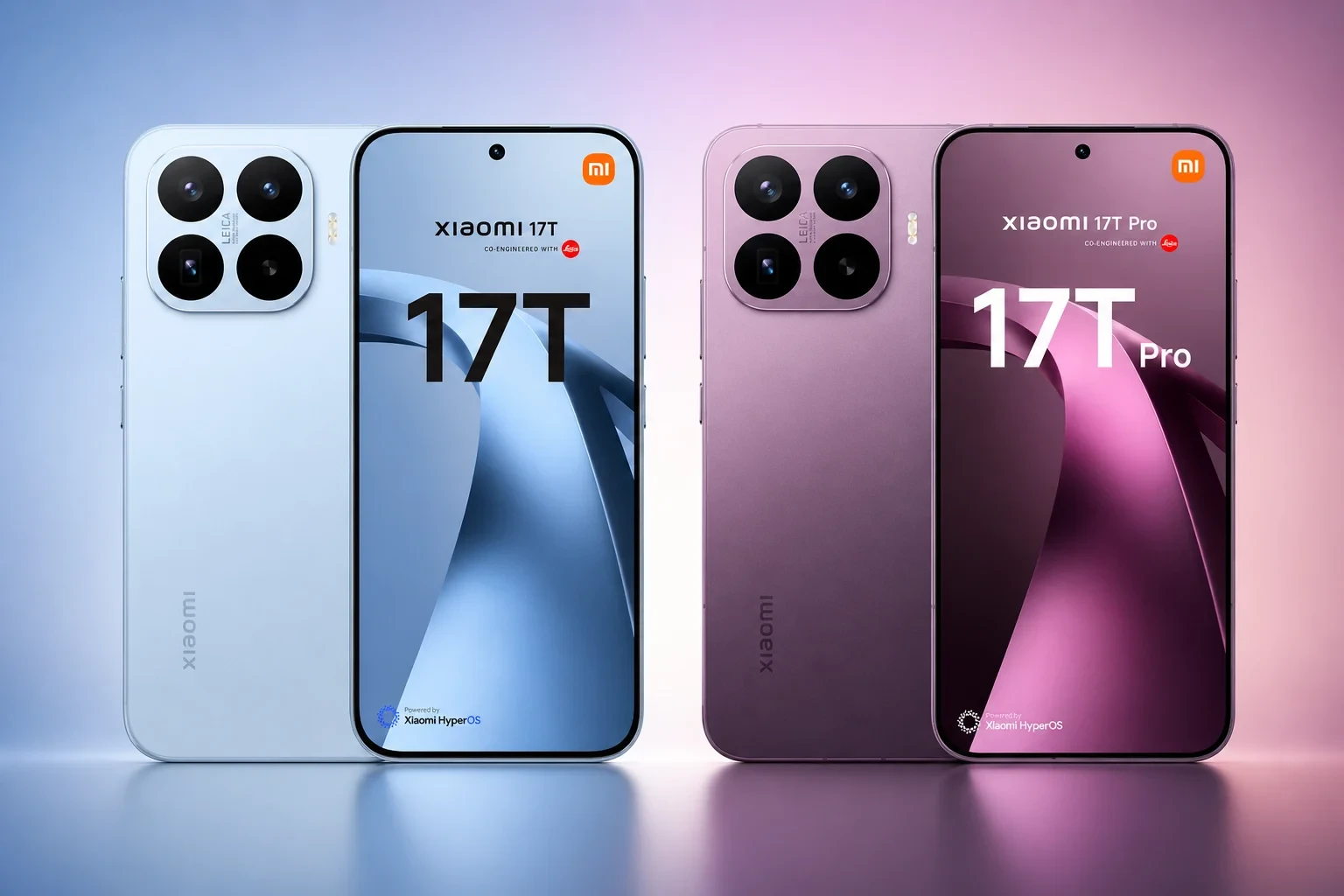
Xiaomi 17T and 17T Pro Specs Leak Ahead of May 28 Launch
Everything about Xiaomi's 17T series leaked early — Leica cameras, Dimensity chips, prices, and a May 28 launch date that's months ahead of schedule.

For most of the past decade, the RAM and storage in a phone were the cheap part — the line item manufacturers happily doubled to make a spec sheet look generous. Xiaomi now says memory accounts for as much as 40% of what one of its phones costs to build, up from a traditional 10% to 15%. Eleven smartphone and tablet models get more expensive starting in September as a result.
The company is the latest and largest Android brand to stop absorbing the cost. Xiaomi has spent the past year holding prices while the DRAM market repriced underneath it, and its own executives have now conceded that is no longer sustainable.
Eleven models across Xiaomi's phone and tablet lineups are affected, with increases reported at up to ¥20,000 — roughly $137 — depending on the market and configuration. The Xiaomi 17T Pro and several POCO X8 Pro variants reportedly take the steepest rises, with some configurations landing around 25% above their launch pricing.
Notably, the increases are not uniform. Higher-memory configurations rise the most, which is exactly what you would expect if memory rather than assembly or logistics is driving the change. A 12GB/512GB variant now carries a materially different cost basis than the 8GB/256GB model sitting beside it on the shelf.
Xiaomi has been unusually specific about the arithmetic. The company reportedly pays around 1,500 yuan — about $220 — more for 12GB of RAM and 512GB of flash storage than it did in the first quarter of 2025. Contract DRAM prices for mainstream 8GB/256GB configurations have climbed close to 200% year over year.
That is the whole story in one figure. A $220 component swing on a mid-range phone cannot be absorbed by trimming margin, because on most Android devices in that tier the margin was never $220 to begin with. The alternative is shipping less memory, which the industry has already started doing at the budget end.
The damage is visible in Xiaomi's results. Smartphone revenue fell 7.5% year over year in the second quarter of 2026, and shipments dropped 26%.
Xiaomi is not an outlier, it is a data point. Samsung's mobile division is heading toward its first loss for the same reason, and Apple raised prices across its Mac, iPad, and Vision Pro lines in June, with CEO Tim Cook describing the memory shortage as a hundred-year flood. Chipmakers are competing on the same pressure — MediaTek is pitching its next flagship as 28% cheaper than Qualcomm's precisely because OEMs have no room left in the bill of materials.
IDC expects global smartphone shipments to fall 12.9% in 2026 to 1.12 billion units, the steepest decline on record, while average selling prices rise 14% to a record $523. Fewer phones, sold for more. The AI industry's appetite for memory is being paid for at the retail counter, and phone pricing is unlikely to look familiar again until DRAM supply catches up.
Everything about Xiaomi's 17T series leaked early — Leica cameras, Dimensity chips, prices, and a May 28 launch date that's months ahead of schedule.
Huawei and Xiaomi plan to adopt LLW DRAM, a faster HBM-inspired memory for on-device AI, by late 2027. Samsung targets 2028 for its own devices.
Apple matched Samsung at 34% European market share in Q2. Xiaomi, Oppo, and Honor all declined as the memory crisis squeezes Android pricing.
Q2 revenue fell 6% and profit dropped 28%, but smartphone ASP hit a record. EVs delivered 104,000 units and crossed 500,000 cumulative.
Organize your favorites into collections
Loading collections...
No collections yet. Create your first collection!